Clinical Verification · Patient Safety Checklist

Bedside Infusion Safety Checklist: 7-Point Patient Verification Protocol

An interactive, patient-centered bedside verification tool adapted from the WHO Surgical Safety Checklist and ISMP guidelines to prevent high-alert medication administration errors.

Clinical Peer Review: Sarah Jenkins, MSN, RN, CRNI, VA-BC Published: October 2026 Verified Board Member →

1. Interactive 7-Point Bedside Checklist

Work through each of the 7 safety verification points below with your bedside nurse prior to the start of each infusion bag:

0 of 7 Completed Interactive Patient Verification Tool
  • Nurse scans your hospital wristband barcode and verbally asks for your full legal name and date of birth.

  • Verify drug name, concentration, volume, and route on the printed label against your physician's order.

  • Confirm the correct drug library profile is selected and the programmed hourly flow rate matches the prescription.

  • Inspect the solution bag against the light to ensure fluid is transparent and free of precipitates, flakes, or discoloration.

  • Nurse palpates site for tenderness/swelling and flushes with normal saline to verify unobstructed blood return before connecting meds.

  • Ensure tubing is free of kinks, clamps are opened, and the appropriate in-line filter (0.22 µm vs 1.2 µm) is fully primed.

  • The nurse call button is physically placed in your hand or the 24/7 clinic emergency phone number is confirmed before the nurse leaves.

2. Risk Assessment Matrix & Governance

The 7-point checklist is clinically linked to our 5x5 Clinical Risk Assessment Matrix, which stratifies the severity of infusion complications against their clinical frequency:
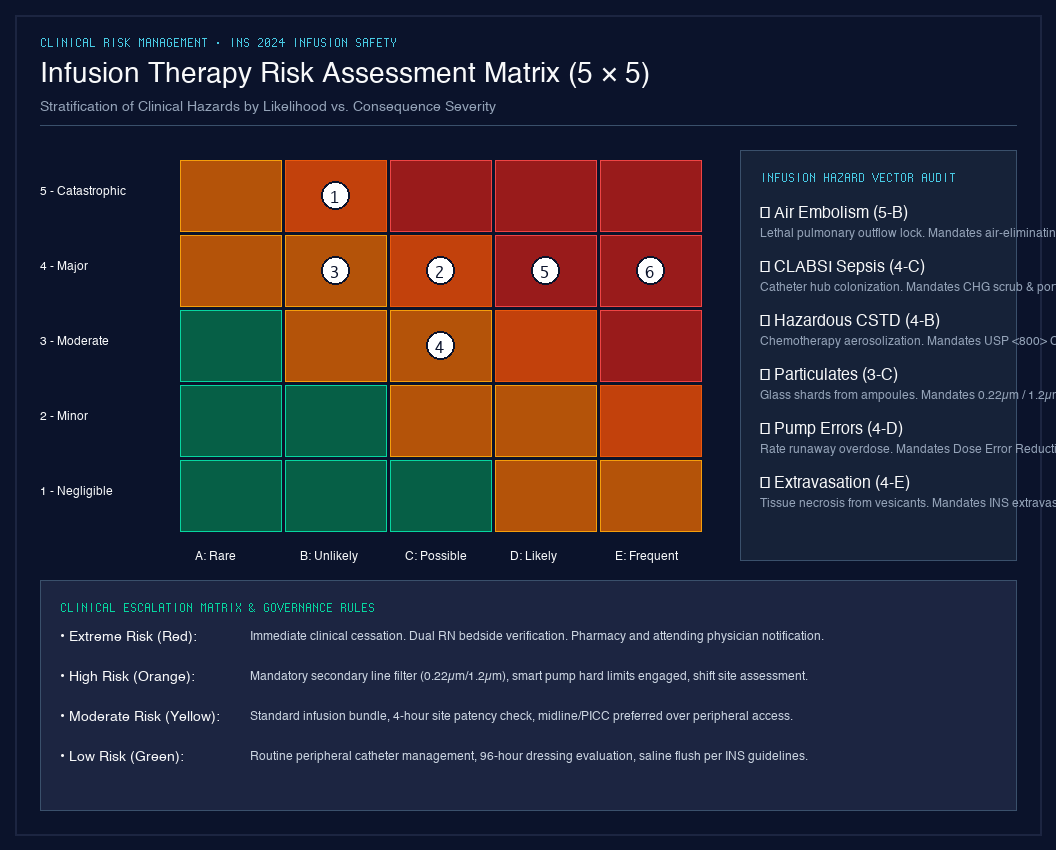
Clinical risk assessment matrix stratifying likelihood vs consequence severity in infusion therapy
FIG 1: Infusion Therapy 5x5 Risk Assessment Matrix detailing the 6 primary clinical hazard vectors and mandatory escalation protocols.

Evidence Base & Literature Citations

  1. Institute for Safe Medication Practices (ISMP). Independent Double Checks: Worth the Effort if Used Judiciously. ISMP Medication Safety Alert! 2019;24(11):1-5.
  2. World Health Organization (WHO). WHO Guidelines for Safe Surgery: Safe Surgery Saves Lives. World Health Organization; 2009.

Clinical Practice Boundary Notice

This protocol provides evidence-based guidance reflecting INS 2024 Standards of Practice and CDC recommendations. Clinical judgment, institutional policy, and patient-specific variables must guide individualized bedside care.