
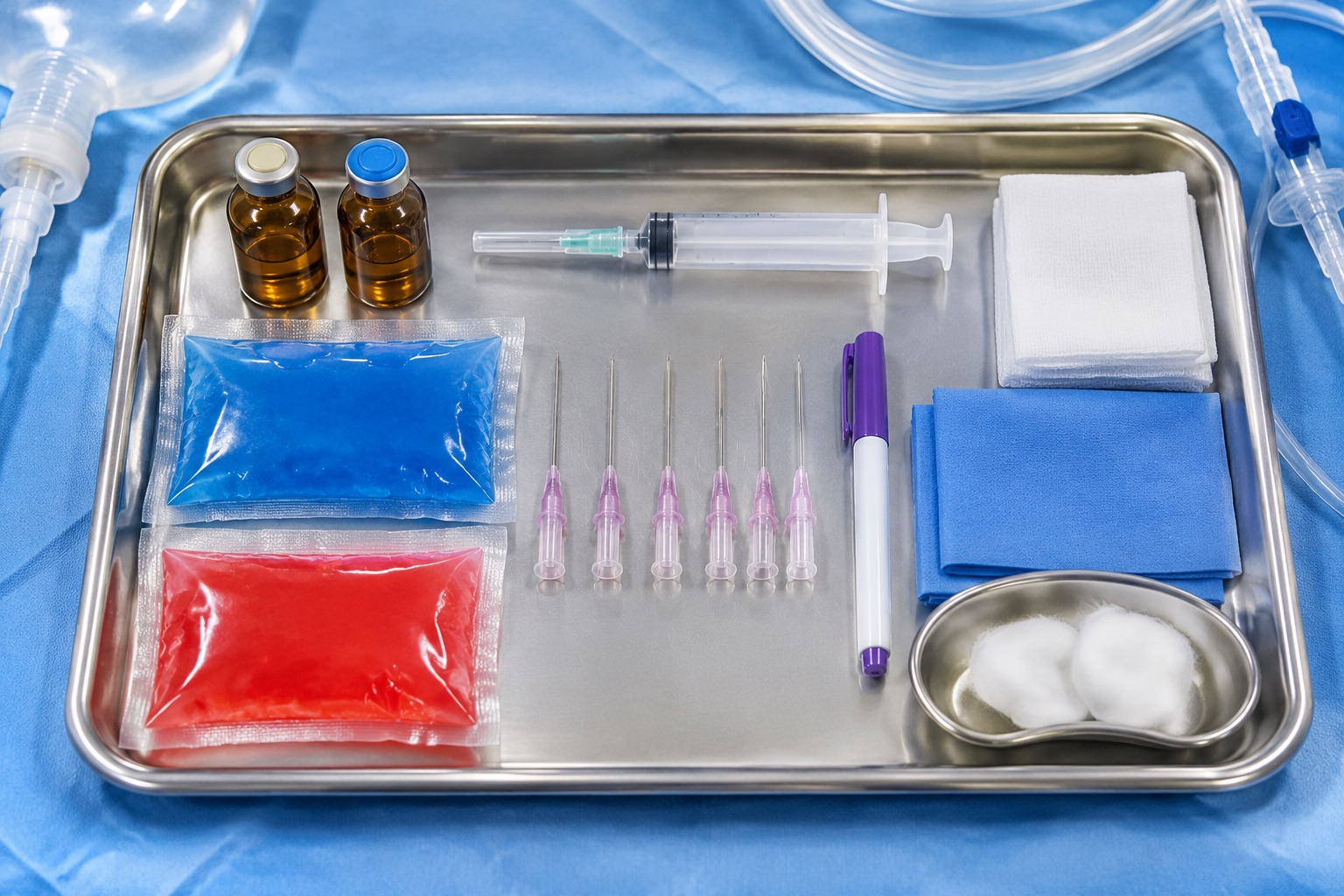
1. Bedside Extravasation Antidote & Thermal Compress Selector
When a patient reports acute burning pain, blanching, or induration during a high-alert infusion, nurses and on-call pharmacists have minutes to avoid irreversible soft-tissue necrosis. First execute the universal INS Standard 44 aspiration cascade: stop the pump immediately, disconnect the tubing without flushing, aspirate 2 to 5 mL gently through the retained catheter, outline the border with an indelible skin marker, and verify the exact antidote class below before removing the needle (unless intraluminal instillation is ordered).
Select Extravasated Medication Class:
2. Why Generic IV Drug Labels Miss Bedside Rescue: 10-Drug OpenFDA Audit
Clinicians often assume that looking up the official US Food and Drug Administration (FDA) prescribing information at 2 AM will provide complete extravasation antidote instructions. To test that assumption empirically, we queried the live openFDA Drug Labeling API on 26 November 2026 across 256 active intravenous product labels spanning ten high-risk vesicants and severe irritants. Every single queried drug class warns explicitly of extravasation and tissue necrosis in its official labeling, yet bedside rescue specificity diverges sharply across drug classes.
While intravenous vasopressors (29 norepinephrine labels, 17 dopamine labels, and 44 epinephrine labels) consistently name phentolamine in their extravasation subsections, and vincristine labeling flags hyaluronidase dispersion, none of the 27 inspected generic doxorubicin labels, 24 oxaliplatin labels, 13 cisplatin labels, 22 amiodarone labels, or 57 vancomycin labels named dexrazoxane, sodium thiosulfate, or hyaluronidase inside their primary generic structured product sections. Relying solely on a package insert during an acute floor emergency delays targeted rescue unless the hospital stocks a pre-built antidote kit with standing pharmacy order sets.
| Intravenous Agent | OpenFDA IV Labels | Latest Effective Date | Boxed Warning | Extravasation / Necrosis Text | Antidote Named in Label vs. Clinical Standard |
|---|---|---|---|---|---|
| Norepinephrine | 29 | 2025-06-17 | No | Yes (Necrosis warning) | Phentolamine named (5 to 10 mg in 10 mL NS SC <=12h) |
| Dopamine | 17 | 2026-10-21 | No | Yes (Necrosis warning) | Phentolamine named (5 to 10 mg in 10 mL NS SC <=12h) |
| Epinephrine (IV) | 44 | 2026-06-08 | No | Yes (Necrosis warning) | Phentolamine named (alpha-1 vasoconstriction reversal) |
| Doxorubicin | 27 | 2026-03-27 | Yes | Yes (Severe ulceration) | Omitted in generic label; Dexrazoxane IV <=6h (ESMO-ONS) |
| Vincristine | 2 | 2025-12-30 | Yes | Yes (Necrosis warning) | Hyaluronidase named (150 to 1,500 U SC + dry warm pack) |
| Cisplatin | 13 | 2024-01-20 | Yes | Yes (Necrosis warning) | Omitted in generic label; Sodium thiosulfate 1/6 M if >20 mL |
| Oxaliplatin | 24 | 2024-10-03 | Yes | Yes (Necrosis warning) | Omitted in generic label; stop, aspirate, warm compress (no cold) |
| Phenytoin (IV) | 9 | 2024-04-09 | Yes | Yes (Purple Glove Syndrome) | No specific antidote; pH 12.0 requires large vein + slow ≤50 mg/min |
| Amiodarone (IV) | 22 | 2026-11-11 | No | Yes (Necrosis warning) | Omitted in label; pH 4.1 irritant/vesicant requires central access >2 mg/mL |
| Vancomycin (IV) | 57 | 2026-01-30 | No | Yes (Necrosis warning) | Omitted in label; dilute ≤5 mg/mL, shift to PICC/central if >5 days |
Reproducible Evidence Audit: openFDA API Query & Scope Notes (2026-11-26)
API Endpoint: Live HTTP GET calls to https://api.fda.gov/drug/label.json filtered by openfda.generic_name:"<agent>" AND openfda.route:"INTRAVENOUS" on 2026-11-26. Counts reflect indexed SPL labels matching exact route and generic tags. Presence of antidote strings was evaluated across the primary generic SPL JSON record; separate brand-specific antidote labels (such as dexrazoxane Totect) carry dedicated extravasation dosing outside generic anthracycline vials.
3. Peripheral Vasopressor Safety Thresholds: When Central Access Can Wait vs. When Harm Spikes
One of the sharpest clinical debates in emergency medicine and intensive care asks whether clinicians must delay vasopressor resuscitation for septic or cardiogenic shock until a central venous catheter is placed and radiographically confirmed. Early case-report compilations appeared alarming: a systematic review by Loubani and Green in the Journal of Critical Care (2015) compiled 325 local tissue injury and extravasation events across 85 reports (318 via peripheral IV vs. 7 via central venous catheters). Crucially, however, those injuries followed predictable failure patterns: across 204 peripheral tissue-injury events with duration data, mean infusion duration was 55.9 hours (median 24 hours, range 0.08 to 528 hours), and 85.3 percent (174/204) were infused through veins distal to the antecubital or popliteal fossae.
Modern prospective cohort meta-analyses clarify the true incidence when structured infusion safety rules are enforced. Pooling 11 adult studies covering 16,055 patients in Critical Care (2021), Tian and colleagues found an overall peripheral vasopressor adverse-event rate of 1.8 percent (95% CI 0.1% to 4.8%), and 3.3 percent across 388 pediatric patients. Even more instructive, Owen and colleagues in the American Journal of Emergency Medicine (2021) meta-analyzed 1,835 adult patients across 9 studies (excluding isolated case reports) and found 122 complications (96 percent minor), with a pooled prevalence of 8.6 percent overall that fell nearly four-fold in units enforcing written infusion safety guidelines: 2.9 percent (95% CI 1.8% to 4.5%) with safety protocols versus 12.0 percent (95% CI 3.8% to 30.0%) without protocols (p = 0.024).
5 Non-Negotiable Guardrails for Short-Term Peripheral Vasopressor Bridging:
- 1. Proximal Large-Caliber Vein Only: Cannulate an 18G or 20G catheter in the proximal forearm, antecubital fossa, or upper arm (never hand, wrist, or foot veins, where 85.3% of historical injuries clustered). Verify brisk blood return before starting norepinephrine.
- 2. Strict 24-Hour Transition Ceiling: Treat peripheral vasopressors as an immediate stabilization bridge while INS Standard 26 ultrasound-guided central access is prepared; convert infusions anticipated to exceed 24 hours to a central line.
- 3. Hourly Visual & Blanching Inspection: Inspect the transparent dressing site hourly without opaque wrap coverage and configure smart pump DERS pressure limits to alarm promptly on occlusion.
- 4. Dedicated Carrier Lumen: Never piggyback intermittent antibiotics or flushes through a peripheral vasopressor line, which delivers inadvertent hypotensive or hypertensive boluses.
- 5. Immediate Bedside Phentolamine Access: Keep phentolamine mesylate 5 to 10 mg in unit automated dispensing cabinets alongside pre-printed extravasation order sets so rescue occurs well inside the 12-hour ischemic window.
4. Antidote Reconstitution, Thermal Contraindications & Non-Cytotoxic Traps
Even when the correct antidote is ordered, three recurring bedside errors undermine tissue salvage: wrong thermal pack selection, premature cold-pack interference with dexrazoxane, and overlooking non-cytotoxic vesicants such as calcium salts or alkaline phenytoin (Reynolds et al., Pharmacotherapy 2014; ESMO-EONS Guidelines, Annals of Oncology 2012).
- Thermal Polarity Rule (Cold vs. Warm): Use dry cold compresses (15 to 20 minutes four times daily) for DNA-binding anthracyclines, mechlorethamine, and large-volume cisplatin to localize the cytotoxic deposit and limit cellular DNA intercalation. Conversely, use dry warm compresses for vinca alkaloids (vincristine, vinblastine, vinorelbine), oxaliplatin, and alpha-1 vasopressors (norepinephrine, epinephrine, dopamine) to vasodilate local capillaries, clear trapped drug, and restore microvascular oxygen delivery. Applying ice to a norepinephrine or vincristine extravasation compounds ischemic necrosis.
- The 15-Minute Dexrazoxane Washout Rule: Because intravenous dexrazoxane (1,000 mg/m² on Days 1 and 2, then 500 mg/m² on Day 3, started within 6 hours) acts systemically as a catalytic topoisomerase II inhibitor and iron chelator inside the extravasated tissue bed, clinicians must remove dry cold packs at least 15 minutes prior to dexrazoxane infusion so adequate blood flow delivers the antidote into the affected limb. Never pair dexrazoxane with topical 99% DMSO, which blunts efficacy and increases blister risk.
- Delayed Non-Cytotoxic Necrosis (Calcium & Phenytoin): Concentrated calcium chloride (2,040 mOsm/L) and calcium gluconate can appear benign immediately after infiltration before triggering delayed soft-tissue calcification (calcinosis cutis) over 5 to 14 days. Likewise, alkaline phenytoin (pH 12.0) and acidic promethazine carry boxed warnings for distal limb ischemia and Purple Glove Syndrome; if severe blanching, tenseness, or sensory deficit persists, consult plastic or vascular surgery early rather than waiting for eschar demarcation. For home caregivers managing central lines, pair these hospital rules with our Caregiver Vascular Access Emergency Action Guide and Infiltration vs. Extravasation Symptom Checker.